

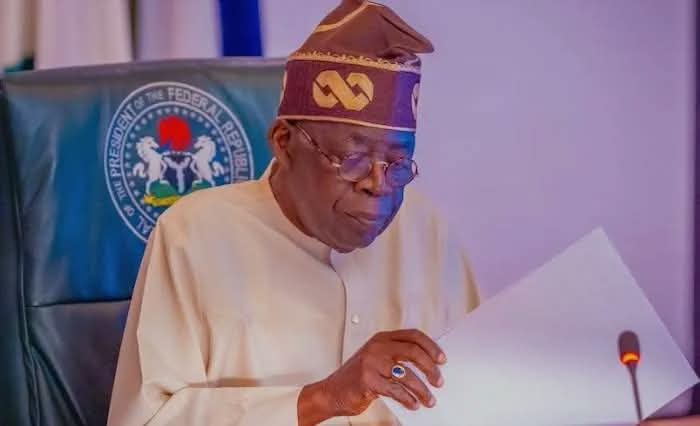
The National Assembly may forward the state police bill to President Bola Tinubu for assent on or before Friday, according to multiple parliamentary officials.
This comes as the November 15 deadline given to state Houses of Assembly to communicate their decisions on the proposed constitutional amendment expired on Sunday, with the National Assembly preparing to take the next step after securing the required two-thirds approval.
The National Assembly had earlier directed the 36 state assemblies to communicate their positions on the bill by November 15, following which Senate President Godswill Akpabio warned that states that failed to respond would be deemed to have withheld their approval.
Senate Leader Opeyemi Bamidele confirmed on Sunday that this week would be decisive for the National Assembly as lawmakers resumed from recess, indicating that the legislature was ready to proceed with the process
Bamidele, however, indicated that the four state Houses of Assembly yet to submit their reports might be given until Tuesday, November 17, to do so.
Although the Senate Leader put the number of state Houses of Assembly that had communicated their responses at 32, sources in the National Assembly indicated that the figure may have risen to 34, leaving only two states yet to respond.
National Assembly sources confirmed that the required constitutional threshold had been met, while adding that no further legislative action would be necessary before the bill was forwarded to the President.
The senators also expressed optimism that Tinubu could receive the bill on Friday, adding that presidential assent was possible before the Christmas break.
Bamidele disclosed the latest position of the National Assembly in a statement issued in Abuja after receiving The Sun Senator of the Year Award for his contributions to parliamentary leadership and lawmaking.
The Senate Leader said the National Assembly had crossed the constitutional threshold required under Section 9(2) of the 1999 Constitution.
The National Assembly transmitted the State Police (Constitution Alteration) Bill, 2026, to the 36 state Houses of Assembly on September 16, 2026, through the Clerk to the National Assembly, Kamoru Ogunlana.
Under Section 9(2) of the 1999 Constitution, a constitutional amendment requires approval by at least two-thirds of the state Houses of Assembly, representing 24 states.
The proposed amendment seeks to establish a Federal Police Service and State Police Services, marking a major restructuring of Nigeria’s centralised policing system.
The push for state police has gained momentum amid persistent security challenges, including banditry, kidnapping, terrorism and communal violence, which have continued to overwhelm security agencies in several parts of the country.
Successive attempts to decentralise policing have, however, faced resistance over concerns about possible political interference, abuse of power and the deployment of state security apparatus against political opponents.
Addressing such concerns, Bamidele said the proposed arrangement was not intended to create ethnic or state armies but to establish community-based policing structures operating within constitutional safeguards.
The latest development comes about a month after the Chairman of the Senate Committee on Media and Public Affairs, Senator Yemi Adaramodu, assured Nigerians in an interview with the newsmen that the state police proposal would be passed into law before Christmas.
Adaramodu said the National Assembly was determined to conclude the process before the Christmas break, describing the proposal as a priority in the ongoing constitutional review exercise.
His assurance came as the Presidential Working Group on the National Policing Bill submitted the draft National Policing Bill, 2026, and 29 consequential amendment bills to the Ministry of Justice for legislative drafting review and validation.
The working group, chaired by the Chief of Staff to the President, Femi Gbajabiamila, said the ministry was expected to return the validated drafts for final consideration before their presentation to Tinubu for approval and subsequent transmission to the National Assembly.