

Morocco says it remains committed to maintaining the ceasefire in Western Sahara despite the end of the United Nations peacekeeping mission that has monitored the disputed territory for more than three decades.
In a statement issued on Wednesday, Morocco’s Royal Palace said the country’s “voluntary commitment” to the ceasefire would remain unchanged following the failure of the UN Security Council to agree on extending the peacekeeping operation.
King Mohammed VI also instructed officials to safeguard Morocco’s territorial integrity, national security, and the interests of residents in the territory.
The development follows a disagreement within the UN Security Council last week, when the United States and Russia vetoed competing resolutions, preventing an agreement on extending the mandate of the 35-year-old United Nations Mission for the Referendum in Western Sahara (MINURSO).
A LONG-RUNNING TERRITORIAL DISPUTE
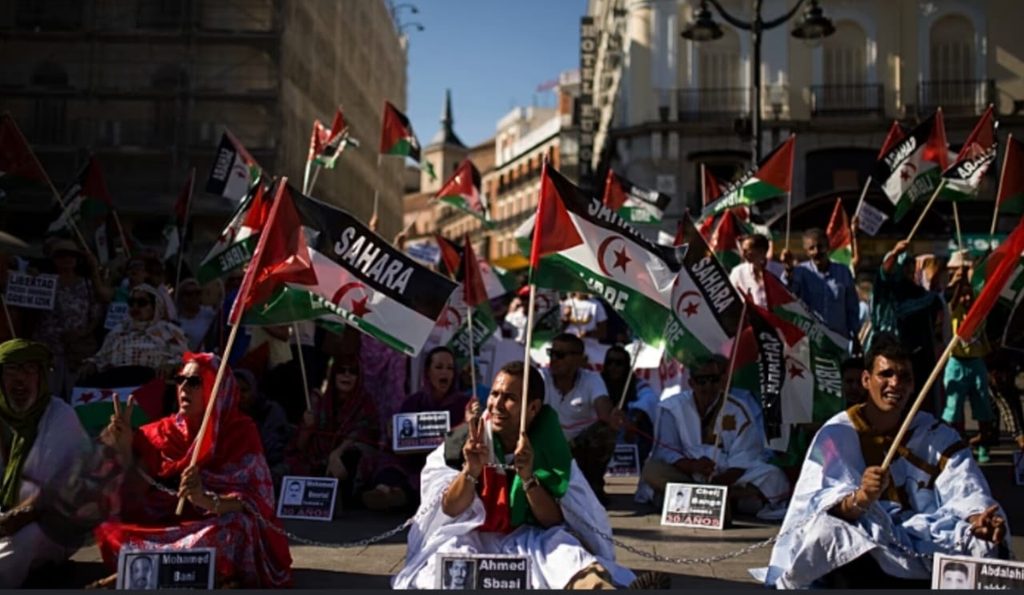
Western Sahara, a mineral-rich territory in North Africa, remains at the centre of a decades-long dispute between Morocco and the Polisario Front, an independence movement backed by Algeria.
The United Nations classifies Western Sahara as a non-self-governing territory, while critics of Morocco’s administration describe it as Africa’s last colony.
Morocco controls most of the territory and considers it part of its national territory, referring to the region as its southern provinces. The Polisario Front, however, seeks independence and regards Western Sahara as the homeland of the Indigenous Sahrawi people.
The UN peacekeeping mission was deployed in 1988 to monitor a ceasefire and support preparations for a referendum on the territory’s future. However, disagreements between Morocco and the Polisario Front over the voting process prevented the referendum from taking place.
The dispute intensified in 1975 after Morocco moved to take control of the territory following Spain’s withdrawal. This triggered an armed conflict between Moroccan forces and the Polisario Front that lasted more than 15 years and claimed over 16,000 lives on both sides, according to the French Senate.
For Morocco, securing international recognition of its sovereignty over Western Sahara has remained a central foreign policy objective. The kingdom has received support from several Western countries, including the United States, France, and the United Kingdom.