

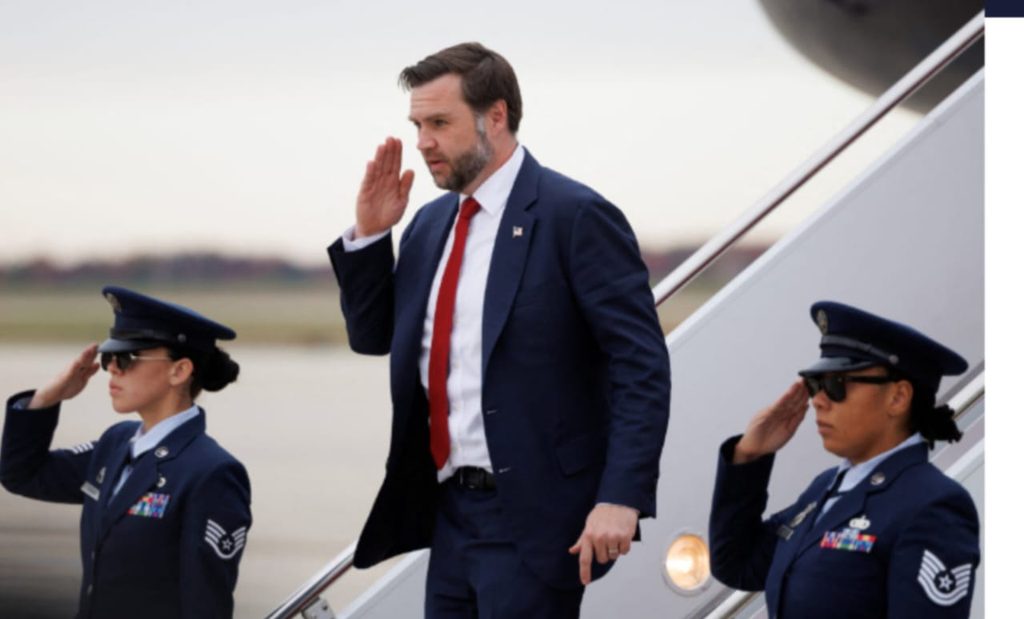
United States Vice President JD Vance has blamed the war and the administration’s relationship with Israel for the Republican Party’s poor performance in the 2026 midterm elections, saying many voters who supported President Donald Trump and him in 2024 switched allegiance to Democrats.
Vance made the remarks in a statement on Wednesday, acknowledging that Republicans had suffered significant losses despite what he described as strong voter turnout among their supporters.
He said internal data analysis had initially suggested that Republican voters were turning out in sufficient numbers to give the party a strong performance, but the figures did not account for voters who had become dissatisfied with the administration and decided to support Democrats.
According to Vance, analysts within the Republican camp had been examining the composition of the electorate to determine whether it was sufficiently similar to the 2024 voting population to favour the party.
He said that despite polls predicting a significant Democratic victory, the data suggested that Republican turnout was satisfactory in some states and exceptionally strong in others.
However, Vance said one of the data analysts he consulted warned that turnout figures did not necessarily mean Republican voters would support the party at the ballot box.
He recalled asking the analyst whether the figures suggested Republicans could shock the world.
Vance said the analyst responded: No. We might do better than the polls suggest. But the data is telling us that a lot of Trump/Vance 2024 voters are pissed and planning to vote for the other guys. Our voters are turning out, but they may not vote for us.
The Vice President said the warning appeared to have accurately predicted the outcome of the elections.
He argued that the Republican Party’s main problem was not inadequate turnout but the defection of voters who had previously supported Trump and him.
He acknowledged that there would be disagreements within the Republican Party over the reasons for the losses, including criticism of the party’s economic messaging.
Vance said a pollster he respected had told him that the Republicans’ messaging on the economy was not sufficiently effective towards the end of the campaign.
However, he maintained that the war and the administration’s foreign policy were the central reasons voters abandoned the party.
Citing another pollster whose projections he said accurately anticipated the election results, Vance disclosed that voters who had supported Trump in 2024 but were considering voting for Democrats identified four major reasons for their dissatisfaction.
Vance said these concerns accounted for nearly all the responses from voters asked what would persuade them to return to the Republican Party.
He added that the findings vindicated those within the Republican camp who had called for a diplomatic resolution to the conflict, specifically mentioning Rachel Campos-Duffy, who had faced criticism for advocating negotiations.
The Vice President also warned against attempts by Republican establishment figures to blame the party’s electoral setbacks on its immigration policies.
He said some politicians would likely argue that the party needed to embrace amnesty for undocumented immigrants, but rejected that position.
Vance added that he was open to changing immigration enforcement strategies, including targeting businesses that employ undocumented workers, but insisted that granting amnesty was not the answer.
He reiterated that the war was the principal reason Republicans lost, claiming that Trump himself had acknowledged this the previous night.
He challenged Republicans who believed the foreign policy position was worth the electoral consequences to defend it openly rather than attribute the losses to other factors.
Vance concluded by urging dissatisfied Republican voters to channel their frustration into supporting candidates who share their political positions.
He acknowledged that those who had warned the party about the consequences of its policies had been vindicated, while encouraging supporters to remain engaged in efforts to strengthen the Republican Party.