

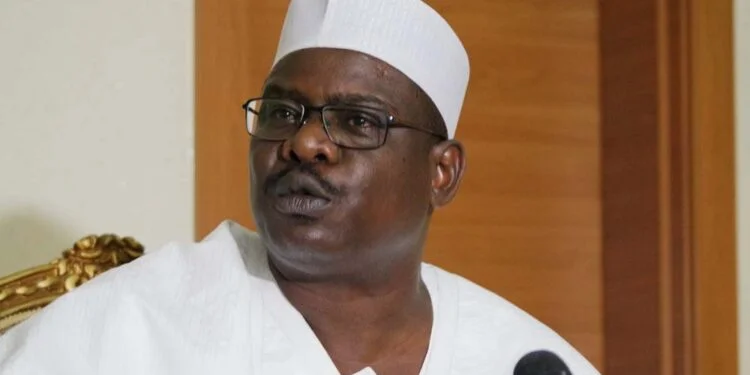
The lawmaker representing Borno South Senatorial District, Ali Ndume, has criticised Nigeria’s political system, saying successive governments have largely served the interests of a privileged few rather than the entire population.
Ndume made the remarks during an interview on Wednesday, in which he admitted to being part of the country’s leadership failures.
The senator said he regretted joining politics, describing it as a dangerous game, particularly in Nigeria.
He likened involvement in Nigerian politics to contracting an incurable disease, arguing that politicians find it difficult to distance themselves from the system once they become part of it.
Ndume said the problem of governance serving a select group did not begin with the current administration but had become an established practice under successive governments.
He added that powerful cabals also wield significant influence within government, making it difficult for public institutions to serve the wider population.
The senator also expressed concern over the growing use of violence in political competition, warning that the situation could escalate if those responsible were not held accountable.
Ndume said he supported a motion on political violence moved by his colleague, Senator Abdul Ningi, noting that lawmakers across party lines had expressed concern about the development.
He warned that the unchecked use of violence to express grievances could threaten national stability, citing experiences in other countries where public unrest had contributed to government collapse.
He urged political leaders and other stakeholders to address the situation before it gets out of control.
Several Reactions has trailed the development, speaking on this a public affairs analyst , Alhaji Muritala Agboola, has called for urgent restructuring of Nigeria’s political system. Speaking during a phone-in interview on Good Morning Nigeria show on Vicinity FM, Alhaji Muritala noted that political violence in the country continues to rise daily.
He, however, expressed optimism that positive change would eventually come to Nigeria’s political system, although he stated that the exact time such transformation would happen remains uncertain.
The analyst also called on Nigerian politicians to prioritise the interests and welfare of the people by dedicating themselves to addressing citizens’ needs rather than pursuing personal interests.