

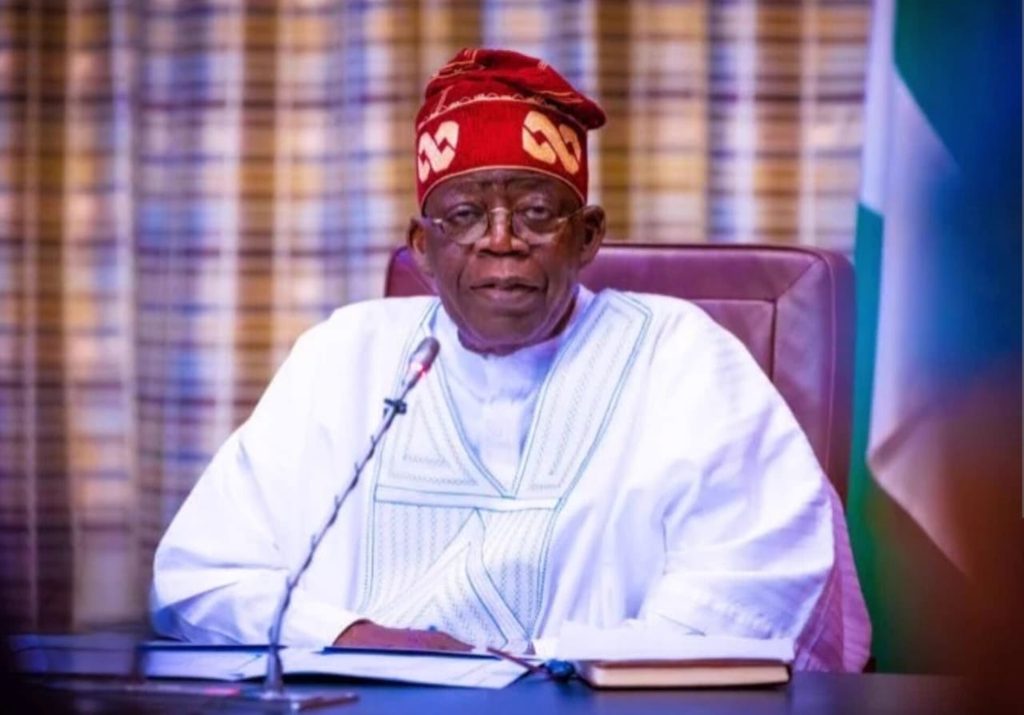
President Bola Tinubu has written to the National Assembly seeking approval for the Federal Government’s 2026–2027 supplementary external borrowing plan.
The plan, valued at $20.5 billion and €1.45 billion, is intended to fund critical infrastructure, agriculture, education and other key sectors of the economy in line with the administration’s development priorities.
The latest request comes amid growing debate over the Tinubu administration’s borrowing plans and the country’s rising debt burden.
In April, Federal Government increased its planned borrowing for 2026 by ₦11.31 trillion to ₦29.20 trillion, while projecting a fiscal deficit of ₦31.46 trillion and debt-servicing costs of ₦15.81 trillion.
The government has faced criticism over its continued reliance on loans despite the removal of the petrol subsidy, which was expected to free up resources for development.
The Nigeria Democratic Congress (NDC) presidential candidate Peter Obi warned in April that Nigeria was heading towards a debt crisis, arguing that the government had continued borrowing despite the subsidy removal. He also raised concerns about outstanding payments to contractors and the implementation of capital projects.
The Emir of Kano, Muhammadu Sanusi II, similarly questioned why the government continued to borrow after ending subsidy payments, arguing that Nigerians should see the benefits of the policy in improved public finances.
However, the Federal Government has defended its borrowing strategy, saying the funds are intended to support critical infrastructure and other development priorities.
In July, Finance Minister Taiwo Oyedele also rejected claims that the Tinubu administration had borrowed about ₦80 trillion in three years. He explained that the increase in the reported debt stock included the effects of naira depreciation on external debt and the recognition of existing obligations, rather than fresh borrowing alone.
The National Assembly had previously approved a $2.347 billion external borrowing request in October 2025 to partly finance the 2025 budget deficit and refinance maturing Eurobonds, alongside a proposed $500 million sovereign sukuk for infrastructure projects.
While some economists have argued that borrowing can support development and poverty alleviation when directed towards productive investments, concerns remain over debt servicing, transparency and whether the loans will deliver tangible benefits to Nigerians.